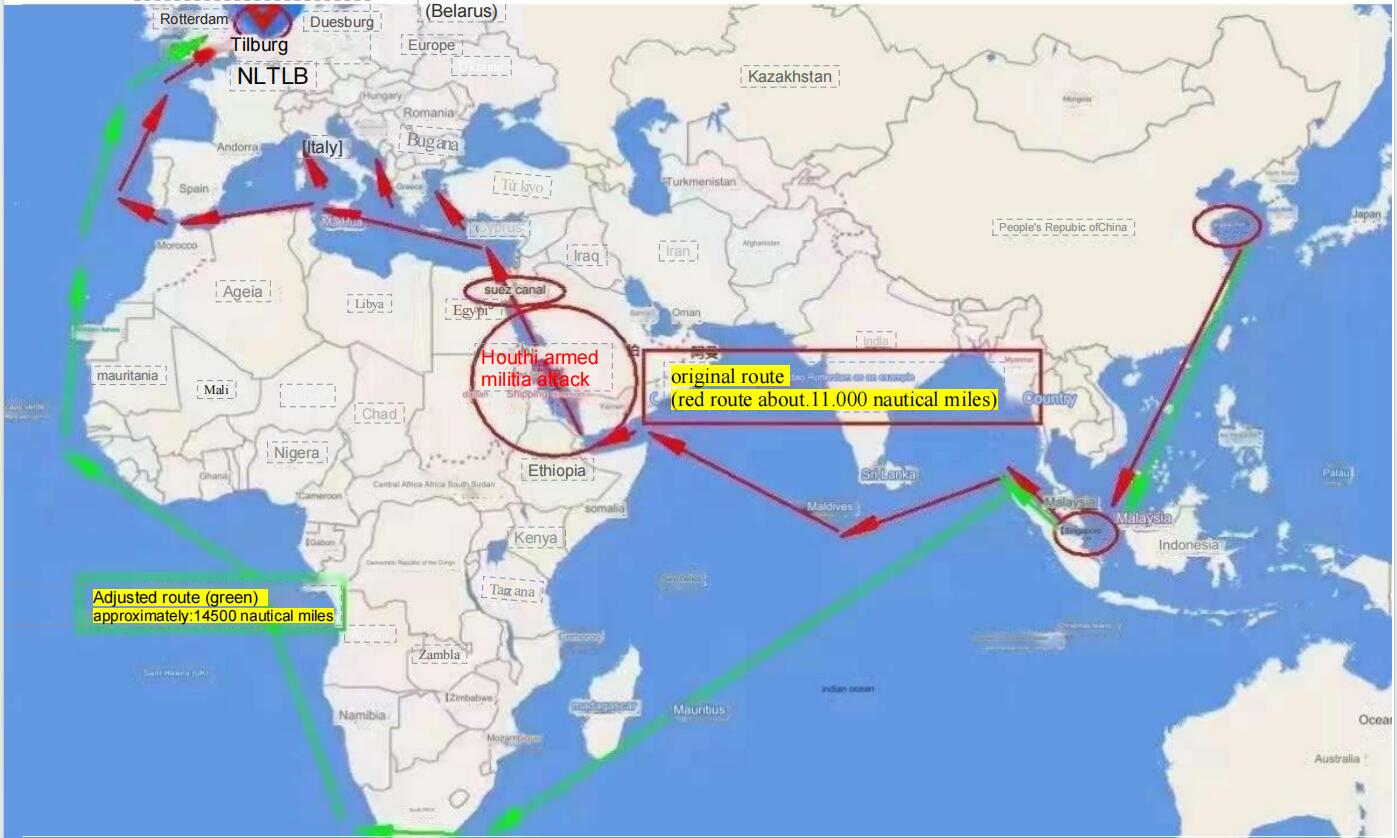
The observed impacts are as follows:
1. Increased transit time: The distance has increased by almost one-third, directly leading to longer voyages. The extended transit time results in direct loss of value for products with shorter shelf life.2. Rise in shipping costs for European routes: increased shipping costs for European sea freight, shipping costs to Europe have increased by at least USD 1000/20`fcl.
3. Rise in shipping costs for African routes: Shipping costs for North African routes have directly increased due to route changes, and it is expected that routes to East Africa, South Africa, and West Africa will also be directly or indirectly affected.
4. Increase in product prices: Due to the rise in shipping costs, imported prices will approach local prices, leading to an upward trend in local product prices. Enterprises are forced to accept higher prices and bear losses.
Change is inevitable. If the Red Sea route is not reopened soon, countries will bear significant economic losses. The increase in product and shipping prices will exceed control for a certain period. However, with the entry of new suppliers and the introduction of new measures, prices are expected to stabilize again. It is foreseeable that as long as the Red Sea route does not return to normal operation, the high prices will not easily decline.